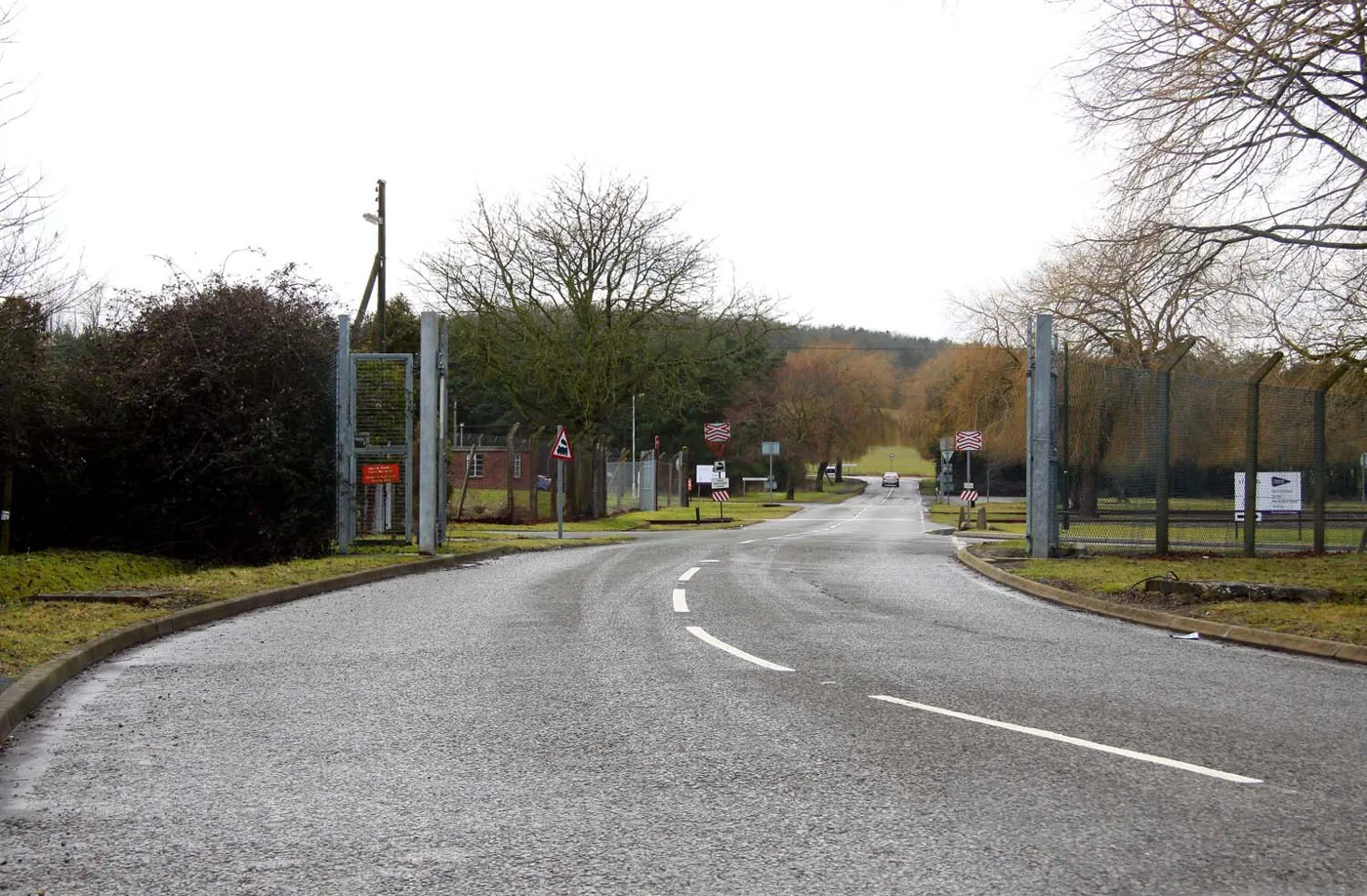

The Ministry of Defence says it cannot supply water or electricity to the planned MOD Bicester asylum site. No extra police or GP funding has been agreed either.
The Ministry of Defence cannot supply water or electricity to the proposed asylum accommodation at MOD Bicester Site A, a defence minister has told Parliament. The Home Office has also confirmed that no extra money has yet been agreed for Thames Valley Police or for GP services around the site.
The answers came this week, in reply to written questions from Calum Miller, the Liberal Democrat MP for Bicester and Woodstock. He tabled them after the site was granted planning permission on 12 November.
Ministers have also repeated that no final decision has been taken to use the site.
Water, power and sewage
Luke Pollard, a defence minister, answered on 18 November that the MoD had made “several assessments” of extending the electricity and water supplies that serve the military estate. It “has determined that it cannot provide either water services or the electrical supply to support any potential Home Office use”.
On sewage, the Home Office minister Anna Turley said on 19 November that Thames Water had advised there is “some existing network capacity”. Further infrastructure would be needed to support the development in full.
- No final connection date has been agreed with Thames Water.
- Interim wastewater arrangements may be needed until a permanent solution is built.
- No maximum length of time has been agreed for any interim sewage tankering.
Police and GP services
The Home Office said on 18 November that “no Bicester specific additional funding has been agreed for Thames Valley Police at this stage”. Police and crime commissioners can apply for financial support where extra policing costs arise directly from large asylum sites.
On health, the plan is for on-site healthcare to carry out first health assessments and routine primary care. But no additional primary care capacity or funding has yet been agreed with NHS Thames Valley Integrated Care Board.
Bomb disposal training
Bomb disposal training is currently carried out at MOD Bicester. Louise Sandher-Jones, another defence minister, said on 16 November that the MoD is assessing other places for that training “to ensure continuity of operational output”.
Cost and feasibility estimates have been prepared, but the MoD will not publish them because doing so “would risk prejudicing the Department’s future position in commercial negotiations”. She said the costs of relocation “will be assumed by the Home Office”.
Costs and timing
Several answers declined to give figures:
- Clean-up costs: contamination, asbestos and unexploded ordnance have all been found on the site. The Home Office said costs for dealing with them “have not yet been finalised”.
- Design work so far: what has been spent will be reported in the Home Office’s annual accounts “in the usual way”.
- The lease: the MoD has done no cost-benefit analysis of leasing all or part of Site A to the Home Office. The terms of occupation have not been settled.
On timing, the Home Office said on 18 November that the site “is now subject to detailed feasibility assessments, which could take several months to complete”.
What it means for you
- Nothing is confirmed yet. Planning permission is in place, but ministers say the decision to use the site has not been made. Several basics, including power, water and sewage connections, are still unresolved.
- Before anyone moves in, the permission carries 28 conditions, including a drainage strategy and a management plan covering on-site healthcare and liaison with the police and health services.
- Local services: for now there is no extra money agreed for policing or GP care in Bicester linked to the site.
The window to challenge the planning permission in the High Court runs until 24 December.
Have your say