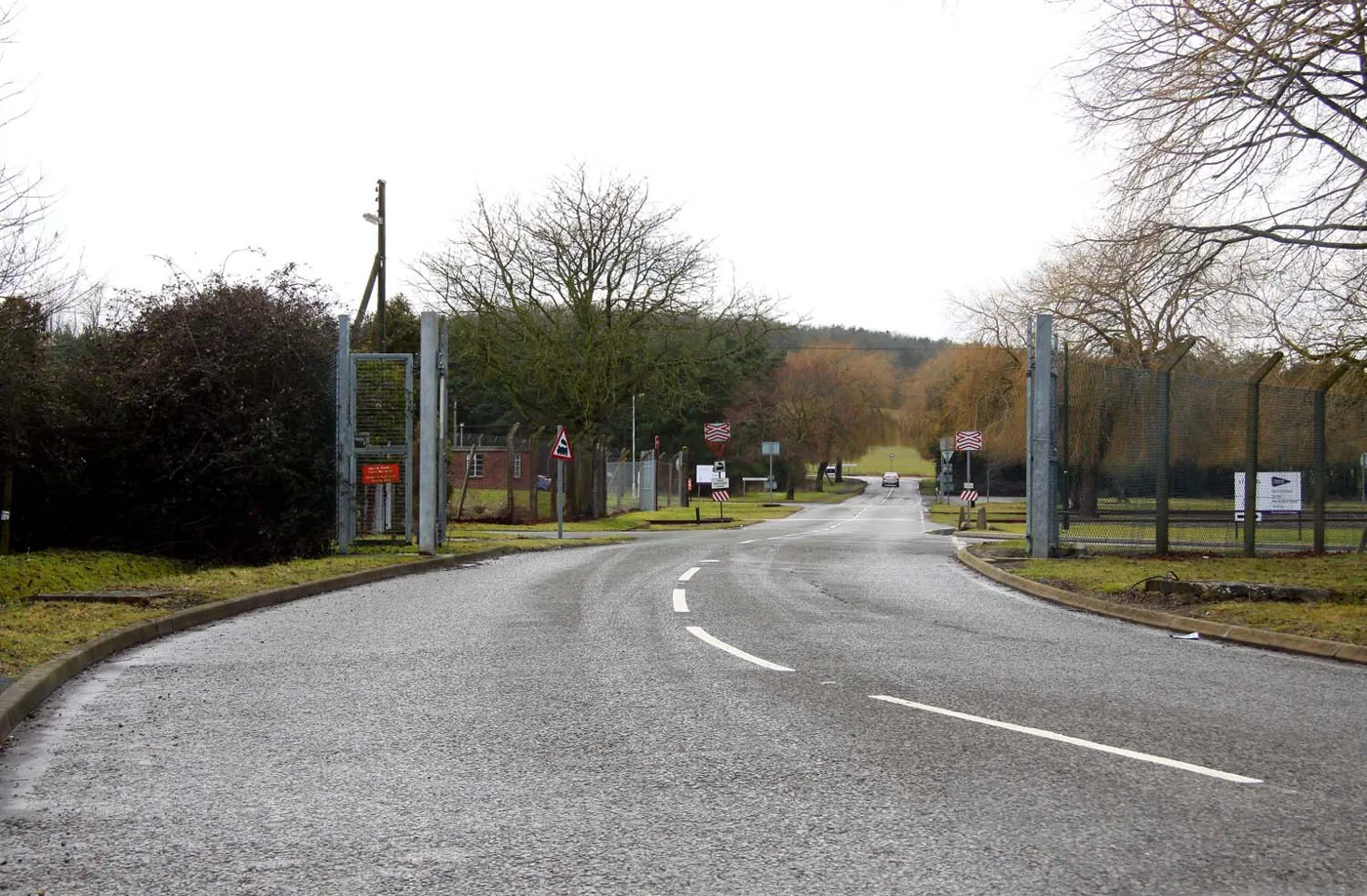

The MOD Bicester Site A permission carries 28 conditions, including a 10-year limit and checks on flooding and GP capacity. Papers published 13 November.
The planning permission for asylum accommodation at MOD Bicester Site A comes with 28 conditions. They include a 10-year limit on the use, a cap of two storeys on new buildings, and a set of plans that must be approved before each phase is occupied.
The Government published the decision letter and its conditions on GOV.UK on the afternoon of Friday 13 November, the day after the decision.
Overview
- How long: the use must stop within 10 years of the decision. Everything built for it must be removed within six months after that.
- How many: no more than 1,256 people at any one time, with an occupancy record kept for inspection.
- How tall: new accommodation blocks can be no more than two storeys or 7 metres high.
- Before anyone moves in: drainage, healthcare, transport, road safety and community-liaison plans must each be approved for that phase.
- Who approves them: the Secretary of State for Housing, not Cherwell District Council.
What the conditions say
The site would be built and filled in three phases, according to the officials’ report that went to the Secretary of State. Most of the conditions apply phase by phase.
Before any development starts:
- a site-wide phasing plan, setting out what each phase contains and in what order it is built and occupied
- a construction environmental plan, covering working hours, dust, noise, asbestos and how residents are told about any out-of-hours work
- a construction traffic plan, covering lorry routes and safe access from the B4011
Before building work in each phase:
- a surface water drainage strategy for that phase
- a contamination risk assessment, before any digging that could disturb contaminated ground
- an unexploded ordnance plan, before any intrusive groundworks
Before each phase is occupied:
- a foul drainage strategy for that phase
- a highway safety and access scheme, after consultation with Oxfordshire County Council
- a travel plan for staff and visitors
- an operational management, safeguarding and community cohesion plan
That last plan must set out the on-site healthcare, the transport for residents, and “a publicly available contact point” for complaints. It must also cover liaison with the council, the police, health services and the local community.
Some work can start sooner. The conditions allow “specified early works” first: drainage camera surveys, utility surveys, temporary fencing on existing hard standing, and contractor welfare cabins. They do not allow digging, clearing vegetation or building foundations.
The height went up after the consultation closed
The Home Office’s application said the modular blocks would be 6 metres high. The decision letter records three later changes:
| Date | What the Home Office asked for |
|---|---|
| 28 October | blocks up to 6.6 metres |
| 5 November | potentially 7 metres, rising to 8.5 metres |
| 6 November | no more than 7 metres |
The consultation had closed on 17 September. The Secretary of State said the change “would make little difference to the consultation responses received”. Roof plant can rise to 12 metres, but the letter says that allowance is not for taller accommodation.
GP surgeries and transport
NHS Thames Valley Integrated Care Board told the Government that nearby GP practices have no spare capacity. The officials’ report says on-site healthcare would handle initial health checks and routine care, reducing but “not eliminating” demand on the NHS.
The decision letter says each phase cannot be occupied until the healthcare arrangements, and any extra help local GPs are shown to need, are secured.
Residents of the site would not have cars. Off-site journeys would be by shuttle bus, minibus or taxi. The officials’ report notes that the application “does not specify fixed routes or destinations”. It says managed transport may go to Bicester or other nearby towns. Under the conditions, routes, frequency and hours can later change without fresh approval, as long as the agreed outcomes are still met.
Oxfordshire County Council, the highway authority, objected in September. In the council’s statement on 13 November, Councillor Kate Gregory said: “We cannot make this safe for pedestrians or cyclists, we’ve said there are no pavements. It’s not safe.”
The Secretary of State gave “limited adverse weight” to three harms she accepted the conditions would not remove:
- poor access to sustainable transport
- effects on community cohesion
- extra demand on local health, emergency and other services
Piddington’s flood warning
Piddington Parish Council’s letter to the Secretary of State is in the published papers. It quoted the Home Office’s own drainage statement, which says Phase 1, with 408 bed spaces, sits on “the lowest part of the site”. It also quoted the statement’s finding that the existing drains were “non-operational”.
The parish council asked for a condition stopping all construction until flood risk, utilities and contamination had been approved. The permission does not go that far. It requires drainage and contamination approval before building in each phase, but lets the early survey and fencing work go ahead first.
The letter also put the Secretary of State “on formal notice” that the parish council intended to go to the High Court if permission was granted without the urgency test being properly met.
What Cherwell says
Cherwell District Council said on 13 November that it was carefully reviewing the approval. It had objected in September. Councillor Lesley McLean, the council leader, said:
“This is disappointing news, and local residents will rightly be feeling extremely angry and let down by this development. They have campaigned tirelessly and peacefully to have their voices heard, and this decision suggests their concerns have fallen on deaf ears.”
She urged the Home Office “to engage urgently and constructively with our residents” before deciding whether to use the site. The Home Office has said a final decision to proceed “is yet to be taken”, as we reported on Friday.
What it means for you
- Legal challenge: anyone aggrieved can apply to the High Court within six weeks beginning with the day after the decision. That runs to Thursday 24 December. A challenge can only argue the decision was legally flawed, not that it was wrong on planning merits.
- Complaints: once a phase opens, the operator must run a public contact point for complaints about the site.
- Construction: the approved construction plan must say how residents near the site are told about any out-of-hours work.
- Travel surveys: staff and visitor travel must be surveyed within six months of first occupation, with reports sent to Oxfordshire County Council.
Have your say